The Intelligence Layer for Mental Health Care.

Collect deeper patient data.
Turn it into better treatment decisions.

Loved by healthcare organizations

FOR EVERY VISIT

See the whole patient, then decide with evidence.

History, diagnoses, and treatment options with evidence, in one view before every visit.

200020052010201520202025

Psychiatric treatments

Buprenorphine-naloxone

12-3 mg, once daily, sublingual film

Wellbutrin XL

300 mg, once daily in the morning, oral tablet extended release 24 hr

Duloxetine

60 mg, once daily in the morning, oral capsule delayed release

Hydroxyzine HCl

25 mg, 1-2 tablets up to 2-3 times daily as needed, oral tablet

Gabapentin

200 mg, up to 2 times daily as needed, oral capsule

Supportive / Motivational Interviewing / Psychoeducation

60 minutes this visit

Non-psychiatric medications

Ibuprofen

Date not documented

Medical events/conditions

No events

Psychiatric episodes and phases

Depression and anxiety onset

Onset around age 13 when father left the home.

Alcohol use / coping mechanism

Used alcohol 2-3x/week as coping mechanism; arrest associated with a fight while intoxicated.

Life events

Father left home

Father had depression and left home when patient was 13.

Sentenced to ACRC halfway house

Residing at ACRC halfway house since 12/2025.

Principal Diagnosis:

F90.0 Attention-Deficit/Hyperactivity Disorder, Predominantly Inattentive Presentation

Complete List

F90.0 Attention-Deficit/Hyperactivity Disorder, Predominantly Inattentive PresentationCitations available

  • Criterion A (Persistent pattern of inattention and/or hyperactivity-impulsivity) · MET — Inattention (≥5 symptoms for adults): MET. The patient endorses a persistent pattern of inattention, including: "fails to give close attention to details" (evidenced by completing treatment plans without prior assessments), "trouble holding attention on tasks" (unable to sit >10-15 minutes at computer), "does not follow through on instructions and fails to finish" (uncompleted assessments), "is often easily distracted," and "is often forgetful" (absent-minded, difficulty remembering feedback)[1]. - Hyperactivity-Impulsivity (<5 symptoms): The patient endorses some symptoms such as being "fidgety," "impulsive," and "often interrupts," but does not meet the full criteria for this domain. The presentation is predominantly inattentive[1].
  • Criterion B (Several symptoms present prior to age 12) · MET — Patient reports onset of ADHD symptoms in kindergarten and was held back one year in school[1].
  • Criterion C (Several symptoms present in two or more settings) · MET — Symptoms are explicitly reported as being "present in home and work environments"[1].
  • Criterion D (Clear evidence of interference with functioning) · MET — Symptoms have caused significant impairment throughout life, including being "held back a year in school," "struggled academically," and current severe occupational impairment with "missed tasks, failures to complete work correctly," and imminent risk of job loss[1].
  • Criterion E (Not better explained by another mental disorder) · MET — While symptoms of inattention overlap with depression and anxiety, the onset in early childhood (kindergarten) long predates the onset of his mood and anxiety disorders (age 13). Furthermore, his reported positive response to a stimulant (Adderall) in the past provides further evidence for a primary ADHD diagnosis[1].

F33.1 Major Depressive Disorder, Recurrent, ModerateCitations available

F41.1 Generalized Anxiety DisorderCitations available

F11.21 Opioid Use Disorder, In Remission, On Maintenance TherapyCitations available

F10.21 Alcohol Use Disorder, In Sustained RemissionCitations available

Prioritizes rapid, maximum symptom relief to improve daily functioning, with slightly higher initial activation risk.

First-Line Option:

Augment with mixed amphetamine salts extended-release (Adderall XR). * Initiation: Start at 10 mg once daily in the morning. * Titration: Increase by 5-10 mg weekly based on response and tolerability. * Target Dose: Typical range is 20-40 mg daily. * Monitoring: Monitor blood pressure and heart rate at baseline and with each dose increase due to potential cardiovascular effects and concurrent use of methadone. An EKG could be considered at baseline. Monitor for any worsening of anxiety.

Adjunctive Therapy:

Psychotherapy: Increase frequency of supportive psychotherapy to weekly. Integrate Cognitive Behavioral Therapy (CBT) for Adult ADHD to build skills in organization, time management, and emotional regulation. CBT is also effective for comorbid anxiety[3]. * Medication Management: Maintain current doses of bupropion XL 300 mg, duloxetine 60 mg, and methadone 135 mg. Continue PRN medications (hydroxyzine, clonidine, gabapentin) for short-term management of acute anxiety and insomnia, with a goal to reduce reliance as underlying conditions improve.


Citations available

Severe ADHD symptoms are driving an acute work crisis, and this option suits a patient who wants the fastest gain in focus and work performance to avoid job loss and accepts more risk of anxiety or jitteriness. He responded well to Adderall before, and NICE supports medication as first-line for adults with significant impairment[2]. Low PHQ-9/GAD-7 scores alongside high impairment point to executive dysfunction, so targeting the principal diagnosis with a previously effective agent to prioritize efficacy should also ease his reactive mood and anxiety symptoms.

Since the employer phone call described at your last visit, how much have you slept, eaten, and had to drink? Are you able to manage basic daily activities now?Citations available

Since that visit, have you had thoughts of suicide or harming yourself, or felt unable to keep yourself safe?Citations available

Please walk me through everything you actually took over the past few days, including methadone, hydroxyzine, clonidine, gabapentin, melatonin, and any clonazepam/Klonopin. What doses did you take, and when?Citations available

Do you feel sleepy, slowed down, dizzy, or less focused after taking any of your medicines? Have you had trouble staying awake or any breathing problems?Citations available

References

  1. Cortese S. Attention-deficit hyperactivity disorder (ADHD) in adults: evidence base, uncertainties. World Psychiatry. 2025.
  2. National Institute for Health and Care Excellence (NICE). Attention deficit hyperactivity disorder: diagnosis and management.
  3. U.S. Department of Veterans Affairs and Department of Defense. VA/DoD Clinical Practice Guideline (CPG BD), full guideline.

Patient monitoring

Change from baseline · 19 weeks
100%50%0%JulJulAugAugSepOctNov
MaiNDSPHQ-9GAD-7
Monitoring

Treatment response reached

PHQ-9 down 65% from baseline; remission (< 5) is 2 points away.

MaiNDS profileToday, 9:40 AM
GPS
72
TED
TBD
TTD
Risk / Safety

Adderall XR + methadone — BP and heart rate monitoring needed

Check vitals at baseline and with each dose increase.

Suggestion: Treatment

Re-start a long-acting stimulant

Prior good response to Adderall; first-line for adults with ADHD and significant impairment.

Follow up questions

Since that visit, have you had thoughts of harming yourself or felt unable to keep yourself safe?

What did you actually take over the past few days, and at what doses?

Explore Comentra →

Transform your practice with measurable impact.

Estimate your return
4X

Faster with the same staff

Reduce time spent on patient data collection and visit preparation.

$250+

More revenue per patient

From new billable evaluation and assessment services.

Zero

Clinician time on data collection

Patients complete intake and assessments on their own before the visit.

94%

Patients at ease

Patients reported feeling comfortable or neutral sharing personal things with Delfia.

From intake to outcomes, all in one platform.

01 Before the visit

Start every visit with clarity

Autonomous data collection: Captures background, history, symptoms, medications, safety checks, and preferences directly from the patient.

Pre-visit decision support: Synthesizes inputs into a summary, timeline, care gaps, targeted questions, and diagnostic and treatment suggestions. Clinicians walk in prepared, not catching up.
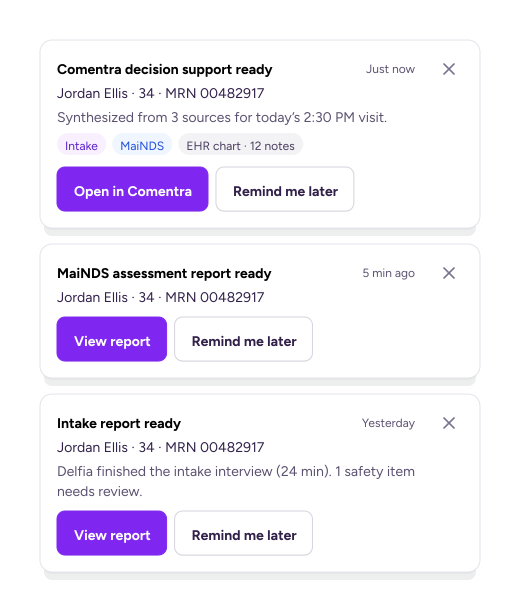
Illustration of automated psychiatric intake

02 During the visit

Real-time intelligence and capture

Delivers real-time clinical decision support while capturing new care details, orders, and draft notes. Frees clinicians to focus entirely on the patient conversation while nothing gets missed.
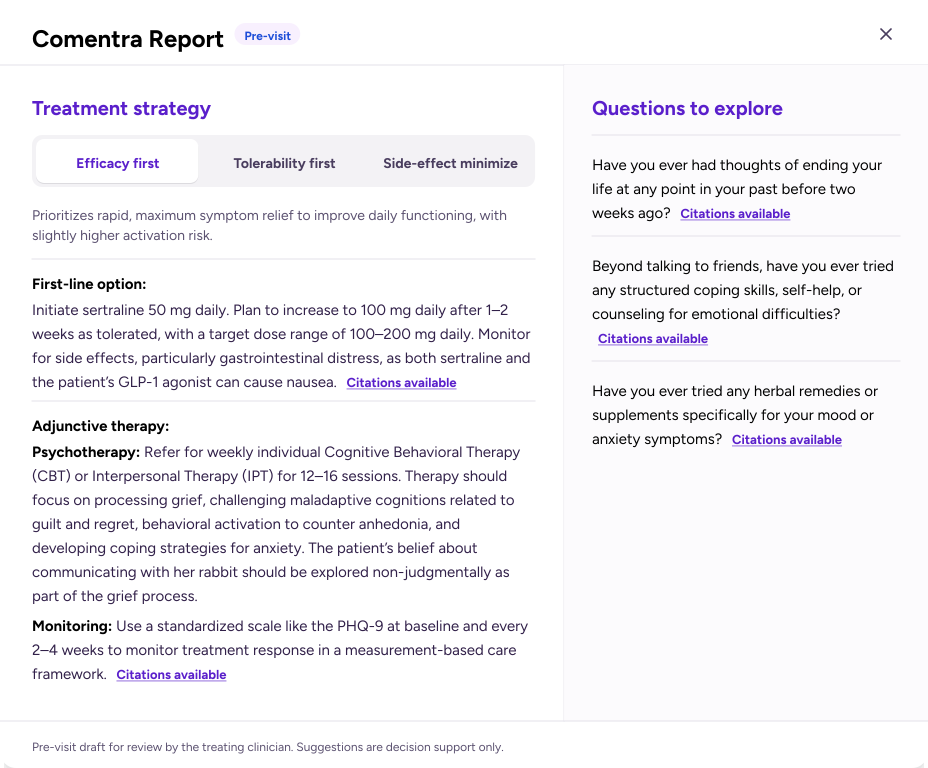
Illustration of the psychopathology assessment

03 After the visit

Chart-ready notes and support

Provides updated, structured notes with rapid editing tools and billing support. Cuts time-to-sign and after-hours documentation.
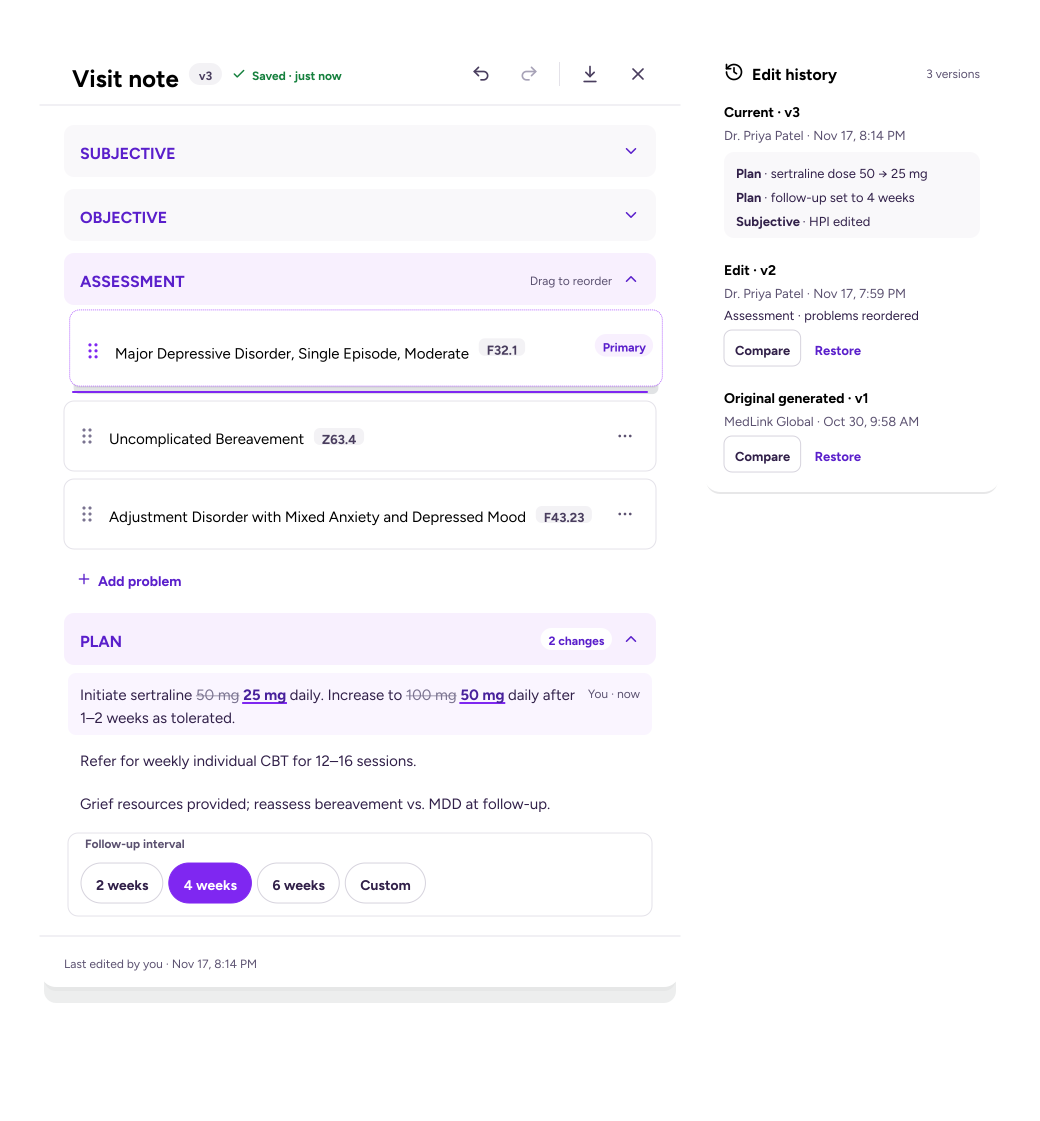
Illustration of personalized treatment suggestions

04 Between visits

Proactive monitoring and check-ins

Automates patient check-ins, longitudinal data collection, and outcome measurement. Surfaces early symptom shifts and adherence gaps so care teams can intervene before issues escalate.
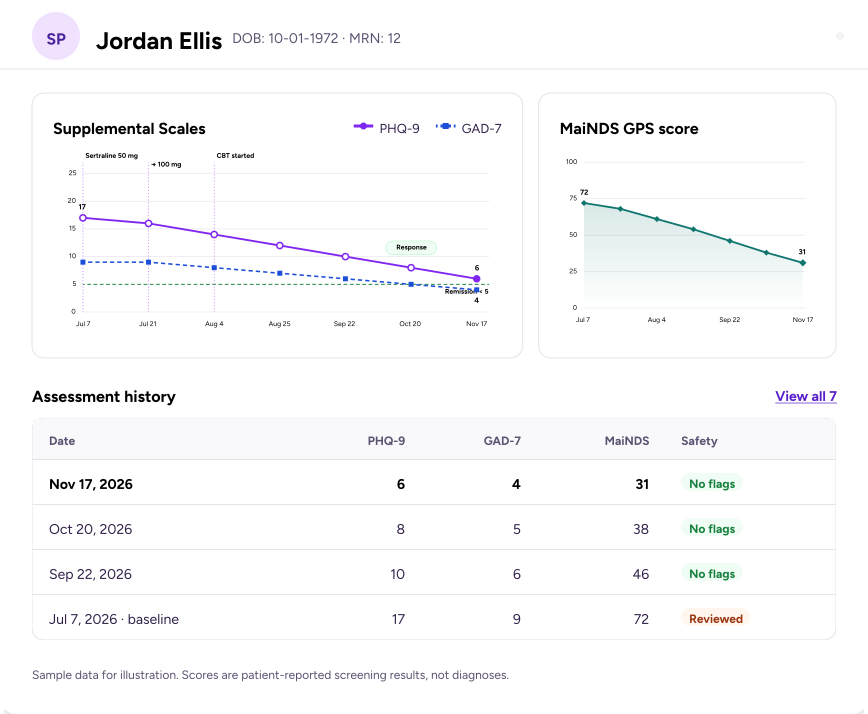
Illustration of outcome tracking across patients and providers

