Treatment Landscape Transformation
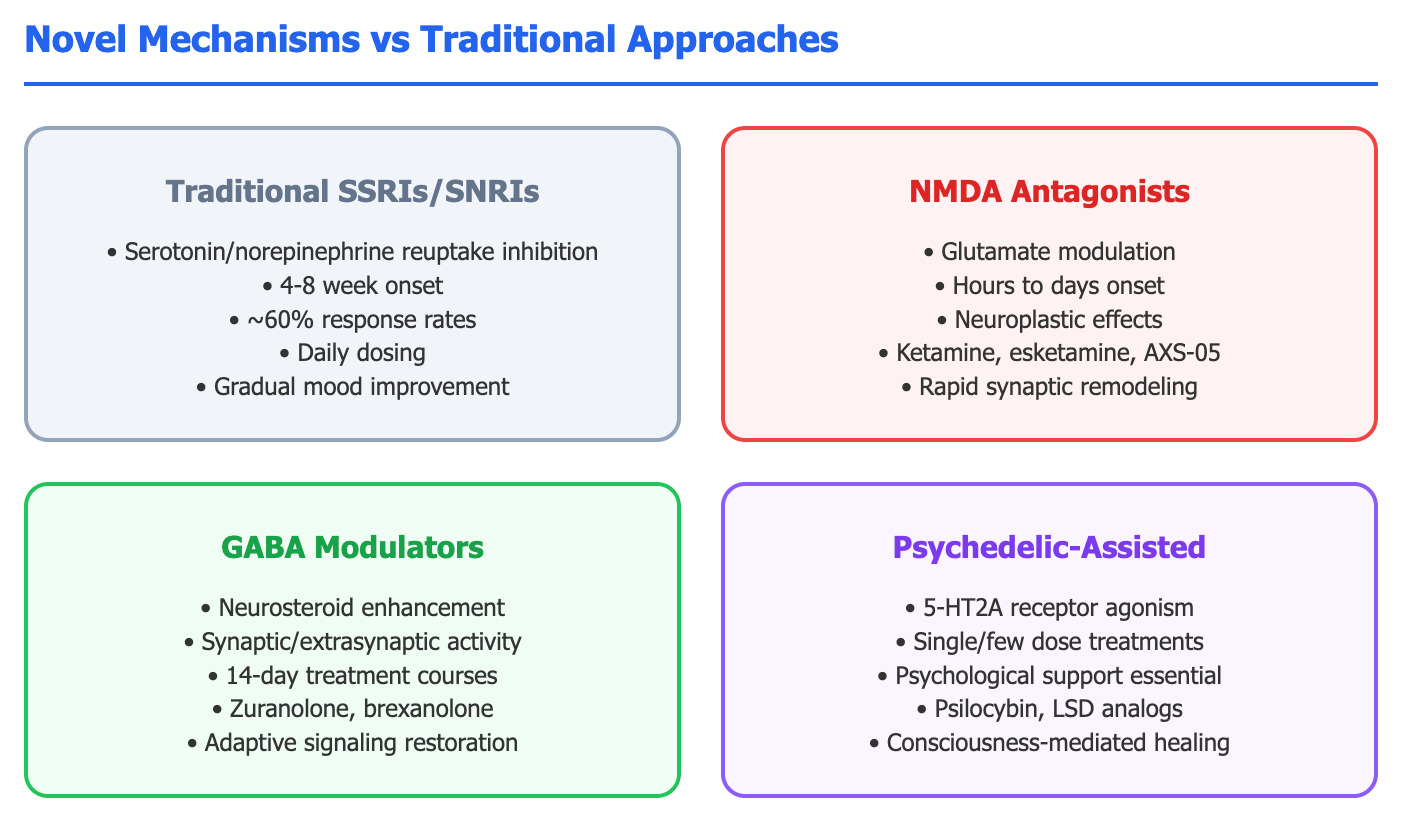
After six decades of predominantly monoaminergic pharmacotherapy, depression treatment has entered a revolutionary phase with multiple novel mechanisms of action now available. Recent FDA approvals mark the most significant advancement in psychiatric therapeutics since the introduction of SSRIs, offering hope for patients with treatment-resistant depression and rapid-onset symptom relief.
NMDA Antagonist Breakthrough: Ketamine and Esketamine
Ketamine's rapid antidepressant effects represent a paradigm shift in depression treatment. Meta-analysis data demonstrate significant improvement within hours to days rather than weeks. Single-dose IV ketamine shows sustained benefits, with effects lasting up to two weeks. Esketamine nasal spray, approved for treatment-resistant depression and acute suicidality, provides clinically meaningful improvement over placebo (4.0-point MADRS reduction by day 28) with response rates of 69.3% versus 52.0% for placebo.
Head-to-head trials comparing esketamine with quetiapine XR demonstrate superior remission rates (27.1% vs 17.6%) and lower relapse risk. Long-term data show sustained efficacy with manageable tolerability profiles, primarily involving dissociation, headache, and nausea that typically resolve within hours of administration.
Oral Extended-Release Ketamine Development
Recent Phase 2 trials of oral ketamine formulations show promising dose-dependent efficacy. The 60mg twice-weekly dose demonstrated optimal balance between efficacy and tolerability, with significantly lower relapse rates compared to placebo across 12-week maintenance periods. This oral formulation potentially addresses accessibility limitations of IV and intranasal routes.
NMDA/Sigma-1 Modulation: AXS-05
Dextromethorphan-bupropion combination (AXS-05) provides dual NMDA antagonism and monoamine reuptake inhibition. Clinical trials demonstrate superiority over both placebo and bupropion monotherapy, with remission rates reaching 47% by week 6. The combination shows rapid onset similar to other NMDA antagonists while maintaining tolerability through bupropion's metabolic inhibition of dextromethorphan.
GABA Modulation: Neurosteroid Revolution
Zuranolone represents the first oral GABA-A positive allosteric modulator approved for depression. Unlike traditional benzodiazepines, zuranolone targets both synaptic and extrasynaptic GABA receptors, potentially restoring adaptive brain signaling. Clinical trials show rapid antidepressant effects within days, with benefits sustained beyond the 14-day treatment period.
For postpartum depression, zuranolone demonstrates consistent efficacy across multiple trials with effect sizes of 0.62-1.47. When combined with SSRI initiation, the CORAL trial showed accelerated antidepressant response, suggesting potential utility in treatment initiation strategies.
Psychedelic-Assisted Psychotherapy
Psilocybin-assisted therapy shows remarkable efficacy in treatment-resistant populations. The COMPASS Phase 2 trial demonstrated 12.3-point MADRS improvement versus placebo, with sustained response rates of 41.7% at week 43. Meta-analyses confirm large effect sizes (SMD -0.79) across multiple studies, with particularly robust effects when combined with psychological support.
Number needed to treat analyses favor psilocybin (NNT 5-10) over traditional antidepressants, though specialized clinical settings and extensive psychological support requirements limit immediate clinical implementation.
Clinical Implementation Considerations
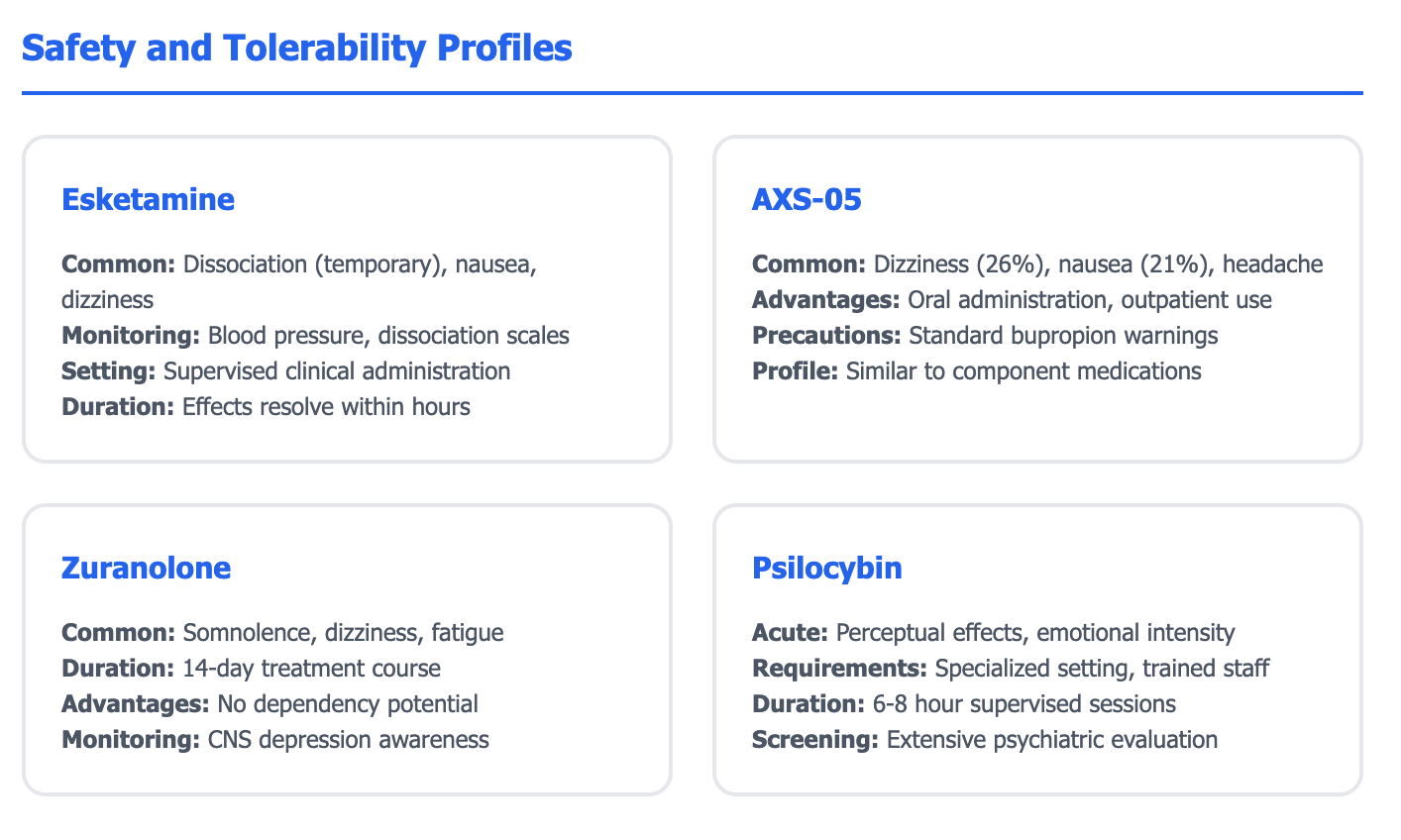
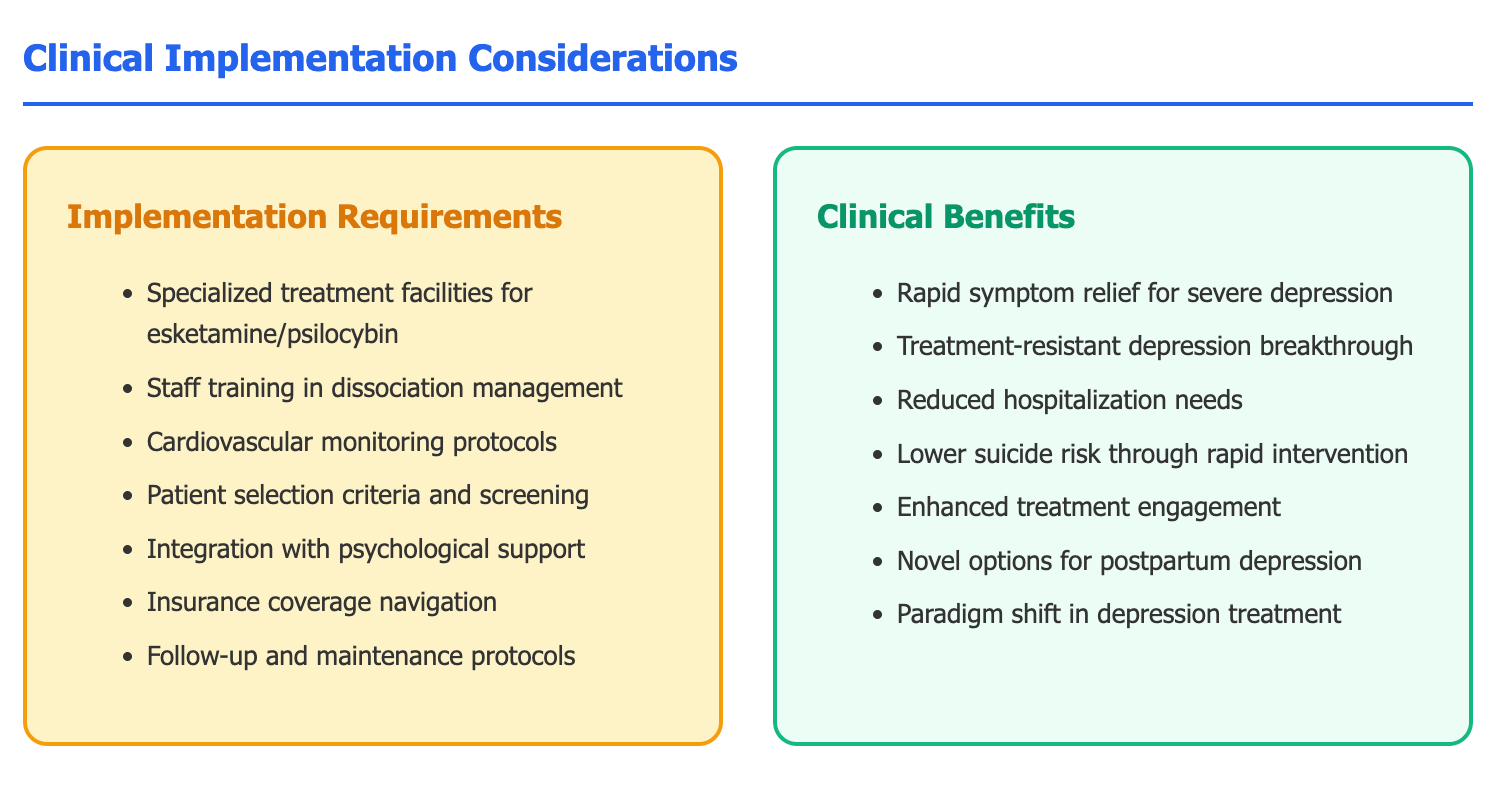
Novel rapid-acting antidepressants require specialized protocols including cardiovascular monitoring, dissociation management, and structured follow-up. Treatment centers must establish protocols for managing acute effects while maximizing therapeutic windows. The intermittent dosing schedules of several agents (esketamine, psilocybin, zuranolone) represent departure from daily medication paradigms.
Future Directions
The convergence of multiple novel mechanisms suggests depression treatment is entering a precision medicine era. Biomarker development, patient stratification strategies, and combination approaches with traditional therapies will likely define the next phase of therapeutic advancement. The integration of pharmacotherapy with intensive psychological support represents a return to comprehensive treatment models while leveraging cutting-edge neuroscience.