Paradigm Shift in Schizophrenia Pathophysiology
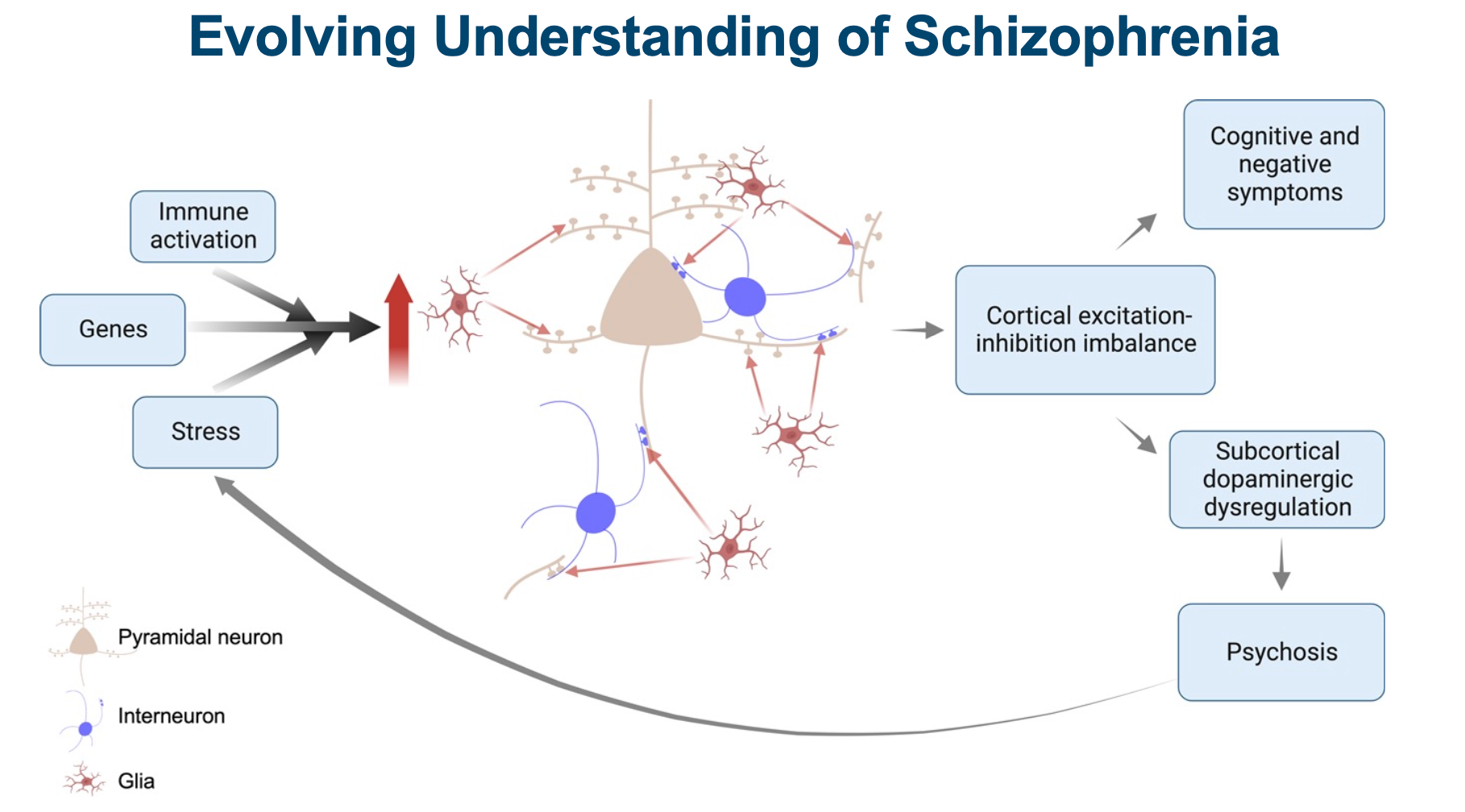
Howes, O.D., Onwordi, E.C. The synaptic hypothesis of schizophrenia version III: a master mechanism. Mol Psychiatry (2023). https://doi.org/10.1038/s41380-023-02043-w
Recent neuroimaging advances have fundamentally challenged traditional models of schizophrenia. The primary dopamine dysfunction occurs in the associative and sensorimotor striatum, not the historically emphasized mesolimbic system. Advanced spatial resolution studies demonstrate significant dopaminergic overactivity in nigrostriatal pathways, with correlations between striatal dopamine synthesis capacity and positive symptoms (r=0.52, p<0.01). This finding renders literature citing mesolimbic hypotheses for positive symptoms incorrect and outdated.
Current Treatment Landscape and Limitations
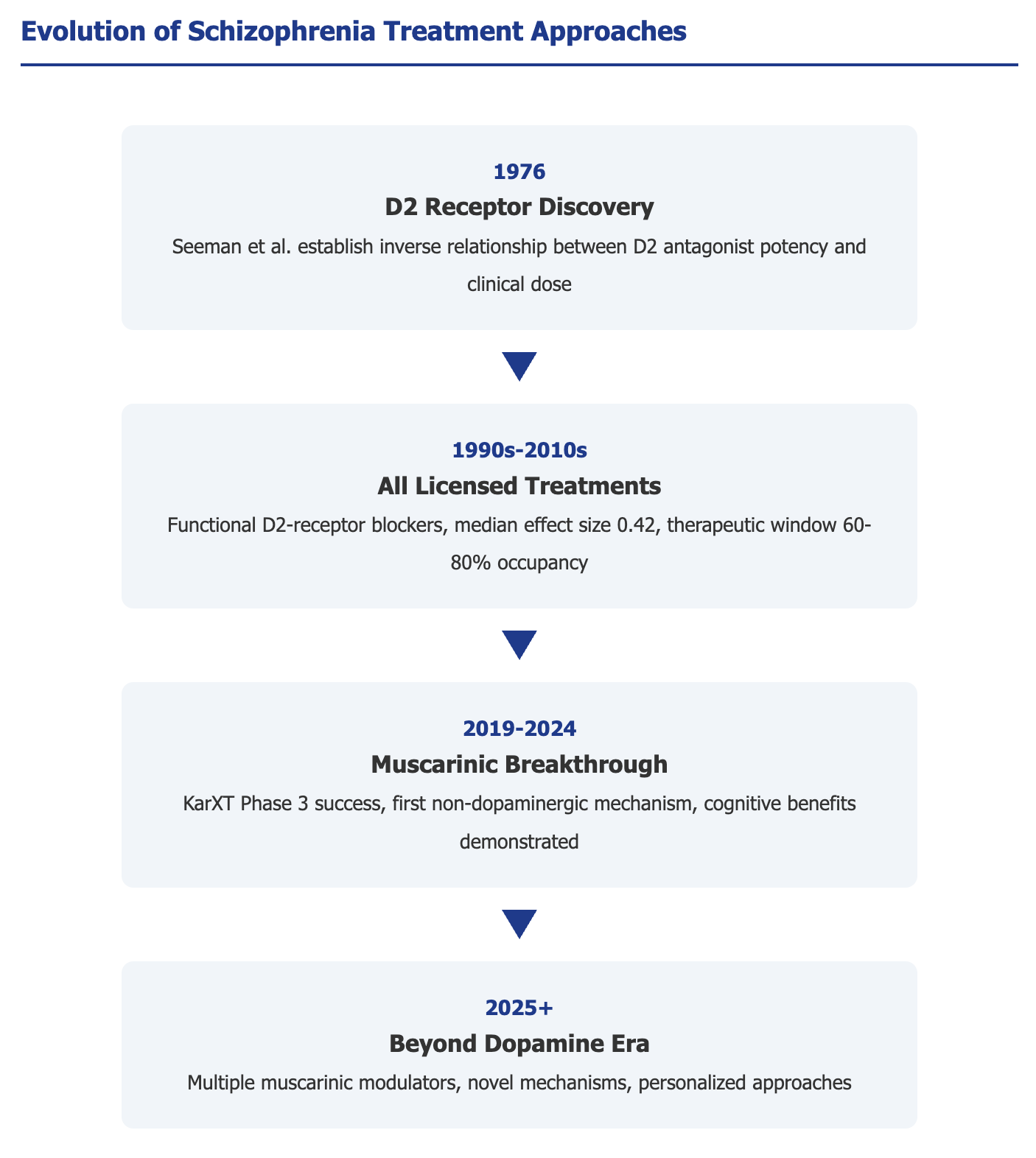
All licensed schizophrenia treatments remain functional D2-receptor blockers with a median effect size of 0.42. PET studies reveal critical therapeutic windows: D2-antagonist antipsychotics require >60% striatal occupancy for efficacy, while >80% occupancy increases motor adverse effects risk. Partial agonist antipsychotics need >90% occupancy for net functional antagonism. Importantly, high D2 occupancy does not guarantee therapeutic response, highlighting the need for novel mechanisms.
Emerging Muscarinic Approaches
The cholinergic system presents promising therapeutic targets through muscarinic acetylcholine receptors (M1-M5). M1 and M4 receptors regulate dopamine circuits relevant to psychosis, with M1 receptors highly expressed in cortical regions and M4 receptors modulating striatal dopamine release. This regulatory relationship provides the foundation for muscarinic-based interventions.
Xanomeline-Trospium: First-in-Class Success
KarXT (xanomeline-trospium) combines M1/M4 muscarinic agonism with peripherally restricted anticholinergic effects. The EMERGENT trials demonstrated significant efficacy with 4.9-point PANSS total score reduction versus placebo. Long-term data show sustained benefits (-33.6 points at week 52) with manageable adverse effects primarily involving gastrointestinal symptoms (nausea 18.5%, constipation 17.1%). Notably, KarXT improved cognitive function in impaired patients, suggesting benefits beyond traditional antipsychotics.
Pipeline Developments
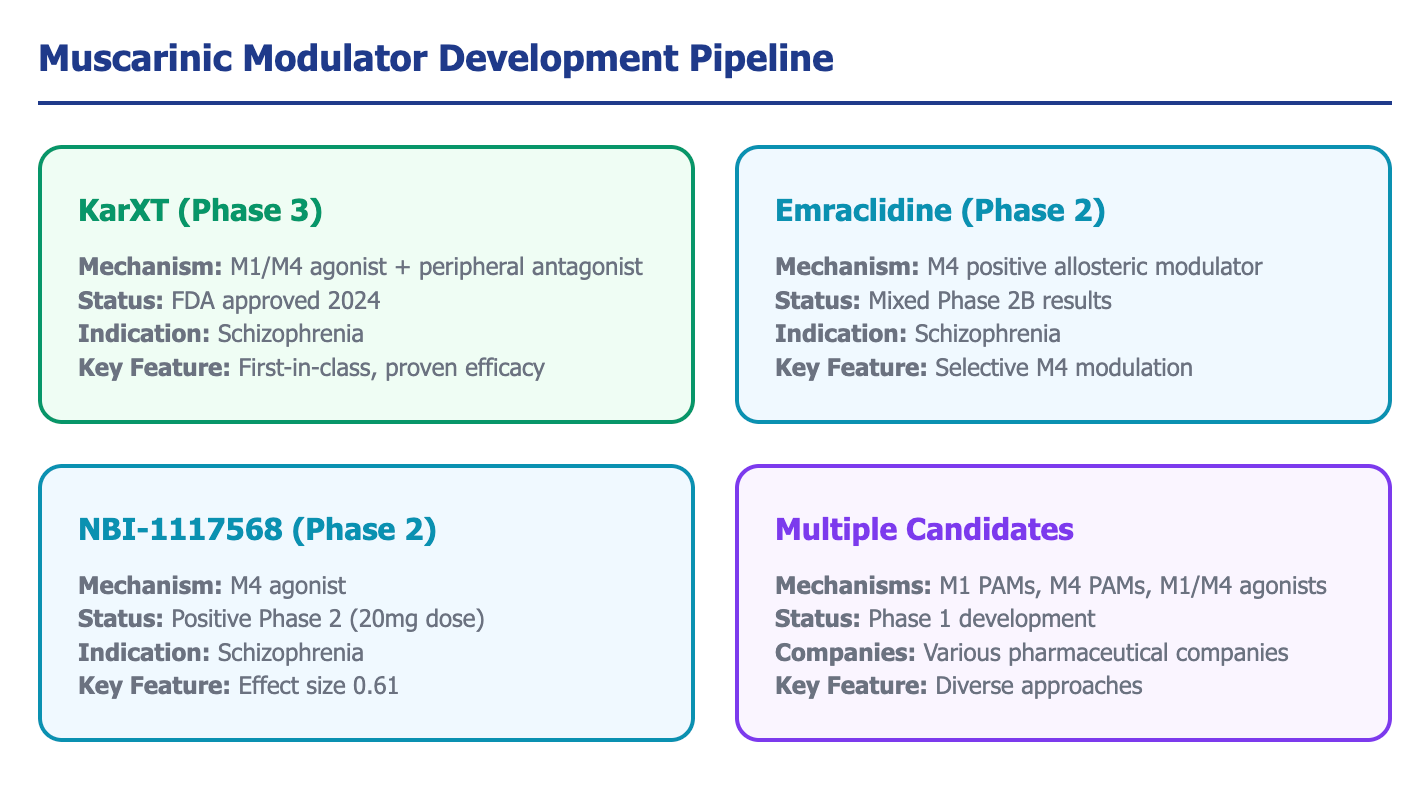
Multiple muscarinic modulators are advancing through clinical development. Emraclidine (M4 positive allosteric modulator) showed promising Phase 1B results with effect sizes of 0.59-0.68, though Phase 2B EMPOWER trials yielded mixed results. NBI-1117568 (M4 agonist) achieved statistical significance with a 20mg daily dose (effect size 0.61). Additional approaches include voltage-gated sodium channel inhibitors like evenamide, showing efficacy in partial treatment responders.
Clinical Implementation Considerations
Muscarinic treatments offer distinct advantages for patients experiencing D2-blocker adverse effects including movement disorders, prolactin elevation, metabolic abnormalities, and sedation. Critical contraindications include concurrent anticholinergic medications. Optimal candidates include patients with residual positive symptoms, those requiring switches from metabolically problematic agents, and early-phase patients avoiding long-term antidopaminergic effects.
Future Directions
The transition beyond dopamine receptor blockade represents a paradigm shift in schizophrenia treatment. Success of xanomeline-trospium validates muscarinic modulation as a viable therapeutic strategy, potentially addressing symptom domains inadequately managed by current treatments. Ongoing research will determine optimal patient selection, combination strategies, and applications across schizophrenia spectrum disorders.