Overview
Attention Deficit Hyperactivity Disorder affects approximately 10% of school-aged children and 4% of adults, with genetic factors serving as the primary contributor. The disorder presents in three distinct types: inattentive, hyperactive/impulsive, and combined presentations. Untreated ADHD carries significant long-term consequences, including academic difficulties, vocational challenges, relationship conflicts, and safety concerns such as increased injury rates and driving accidents.
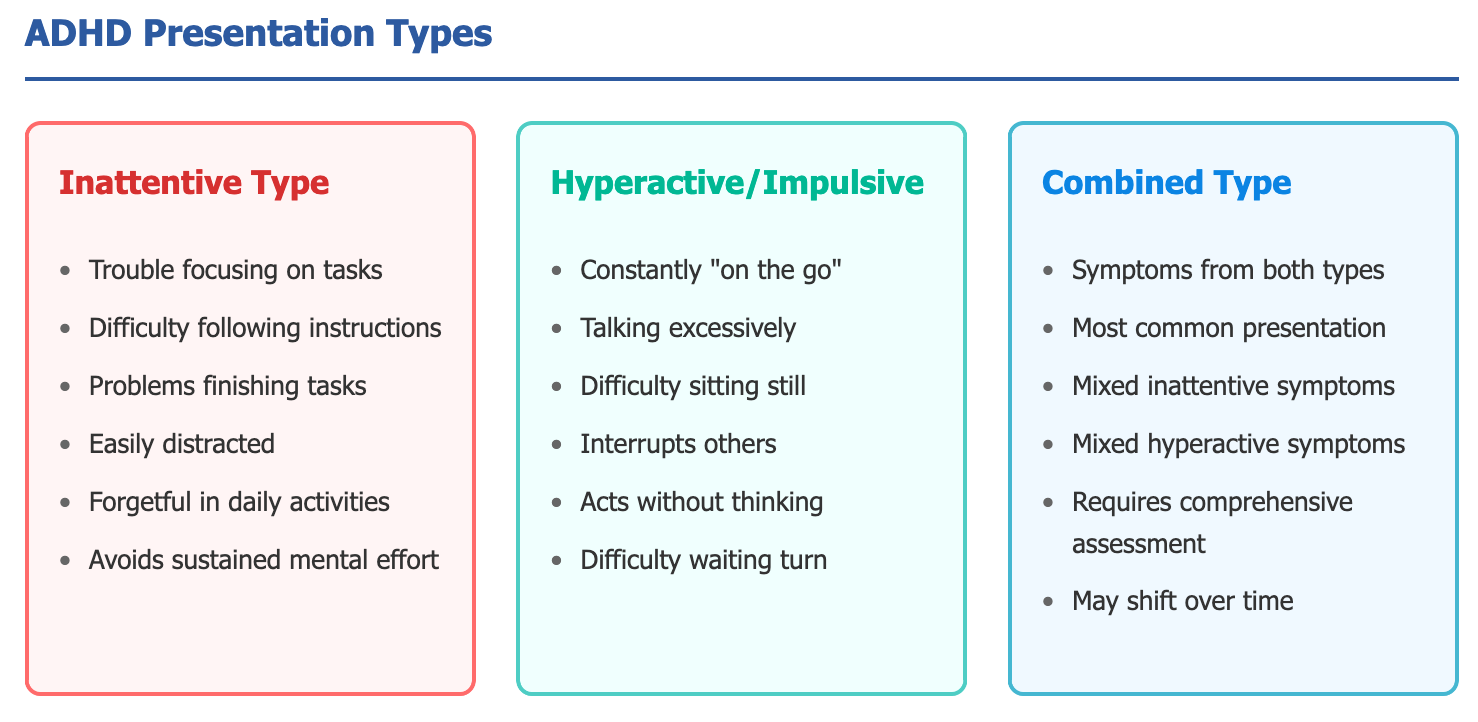
Diagnostic Considerations for Primary Care
Primary care providers play a crucial role in ADHD identification and should initiate evaluations for any child or adolescent presenting with academic or behavioral problems accompanied by symptoms of inattention, hyperactivity, or impulsivity. Effective diagnosis requires comprehensive assessment including parent/guardian interviews, teacher reports, and standardized rating scales, with confirmation of impairment across multiple settings.
For adults, many cases represent continuation from childhood, though some individuals may receive their first diagnosis in adulthood. Adult evaluations should include review of historical symptoms, medical examination, and adult-specific rating scales.
Case-Based Learning: Treatment Challenges
Medication Non-Response in Children
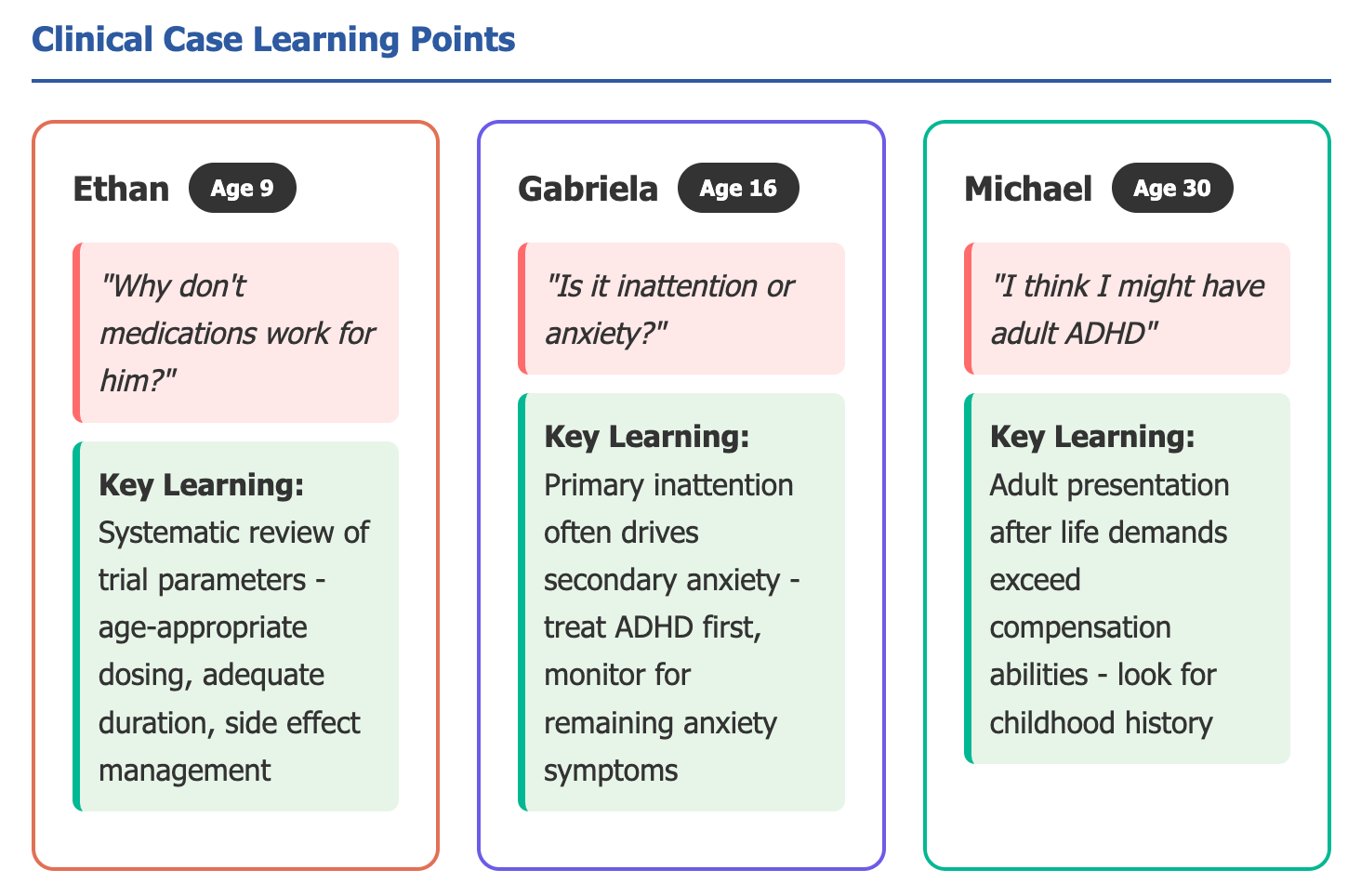
The case of 9-year-old Ethan illustrates common factors contributing to apparent treatment failure. Clinicians should systematically evaluate: diagnostic accuracy, comorbid conditions (autism, depression, anxiety), learning disorders, environmental stressors, and medication trial parameters. Critical medication factors include age-appropriate dosing, adequate trial duration, and formulation selection. Young children may require lower starting doses with gradual titration and extended trial periods.
Differentiating ADHD from Anxiety
16-year-old Gabriela's case demonstrates the complex relationship between inattention and anxiety symptoms. Primary inattention often precedes and contributes to secondary anxiety, particularly in academic settings. Treatment should address the primary ADHD symptoms first with stimulant medication, which typically does not worsen anxiety and may provide indirect benefits for worry symptoms.
Adult ADHD Recognition
30-year-old Michael's presentation highlights adult ADHD that was previously unrecognized due to successful compensation strategies. Increased life demands—career advancement and family responsibilities—can unmask previously manageable symptoms. Adults may present with depression-like symptoms but report lifelong patterns of inattention, disorganization, and procrastination dating to childhood.
Treatment Individualization Challenges
Current evidence indicates no validated prediction models exist for individualizing ADHD treatment strategies based on patient clinical, environmental, cognitive, genetic, or biological characteristics. This underscores the importance of systematic trial-and-error approaches with careful monitoring.
Comprehensive Treatment Approach
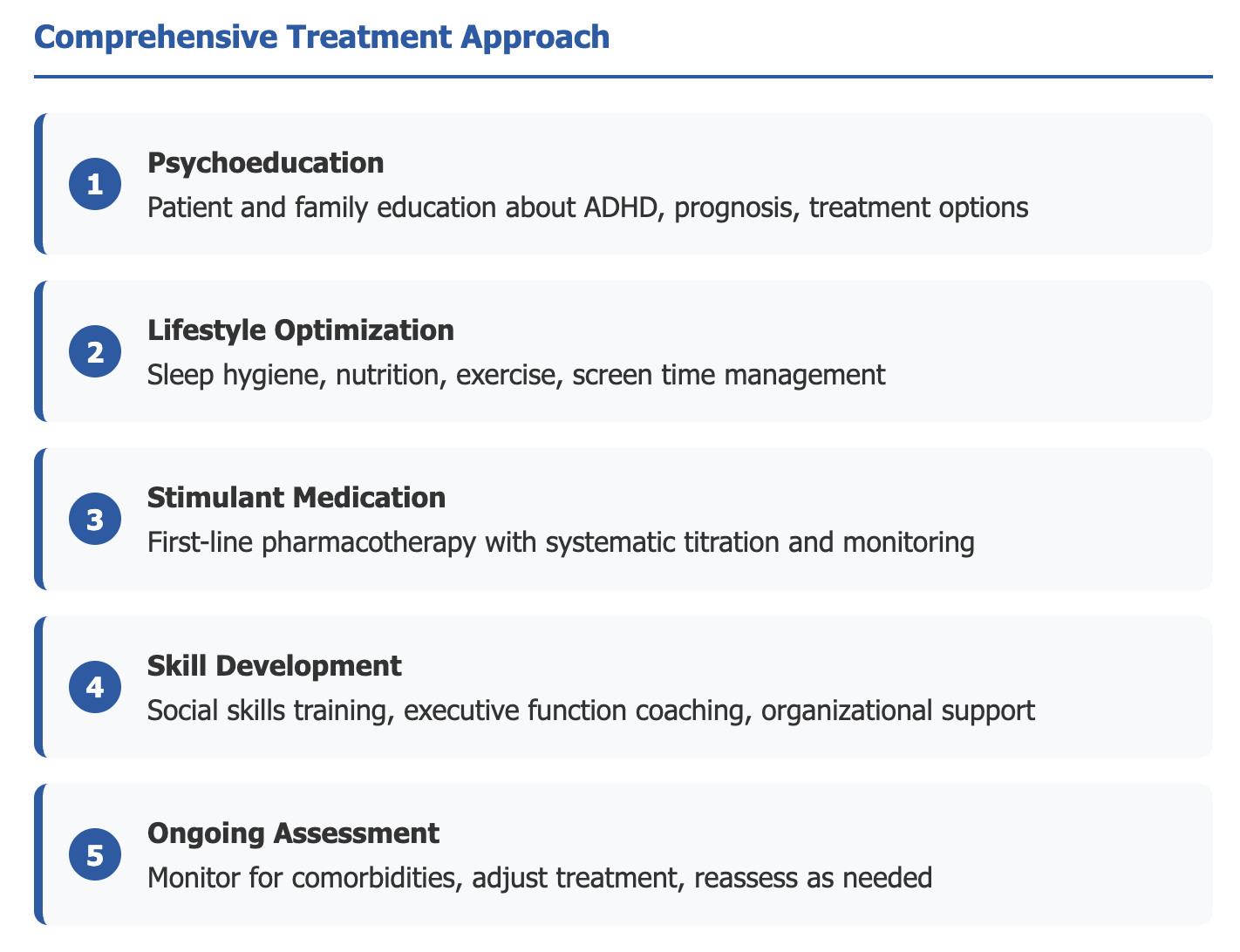
Effective ADHD management extends beyond pharmacotherapy to include patient and family psychoeducation, lifestyle modifications (sleep, nutrition, exercise), and targeted skill development. Social skills training may address peer relationship difficulties, while executive functioning interventions can improve organizational abilities. Stimulant medications remain first-line treatment, supporting behavioral changes.
Clinical Takeaways
ADHD represents a chronic, often lifelong condition requiring ongoing management and periodic reassessment. Successful treatment demands recognition of comorbid conditions, comprehensive evaluation of medication trials, and integration of behavioral interventions. Clinicians should maintain awareness of ADHD's familial patterns and provide appropriate education regarding genetic risks for patients' children.